Advance readers wanted
Ready, Steady, Stay
A short book about the word that comes after steady.
About a hundred pages. I am looking for thirty people to read it before it is published, and to say honestly what they made of it.
The runner and the monk
Identical through the first two words. Both settle into a position. That is ready. Both narrow their focus until the world fades away. That is steady. Same posture, same silence, same discipline.
The sequence forks. The runner goes: he releases everything he was holding, toward a goal, still gripping the expectation. The monk stays: he releases the same held position and lets the expectation go with it.
Likely you were taught one of those two endings, and never knew the other.
Staying is a pause
We are taught to think, and we are taught to do. Nobody cares for the gap between them, and part of the reason is that it has no respectable name. We call it nothing.
And nothing is the word we reach for when something has failed. Nothing worked. I did nothing today. It's a cursed word, and it is the first thing being cut when optimising a life.
This book argues that the pause is not merely the absence of thinking and doing. It is what refines both. Remove it and the other two get worse, which is why the busiest version of you is rarely the best version.
Nothing is easy to get rid of, and hard to get back.
Some of what the pause buys you
Thoughts arrive the way trains arrive at a large station. Board the first one and it takes you wherever it was already going.
Stand on the platform a moment longer, observing the departure board. This one is mine, that one is the party train, no thank you. Stay longer still and you learn the shape of the whole system: what it contains, what you are capable of, what the options ever were.
Actually, you already do this in at least one place. You may have your best thoughts in the shower, and there is a reason it is the shower and not the sofa. Your hands are busy, so you have an excuse for staying rather than going. Nobody can accuse you of doing nothing, and neither can you.
Who's asking
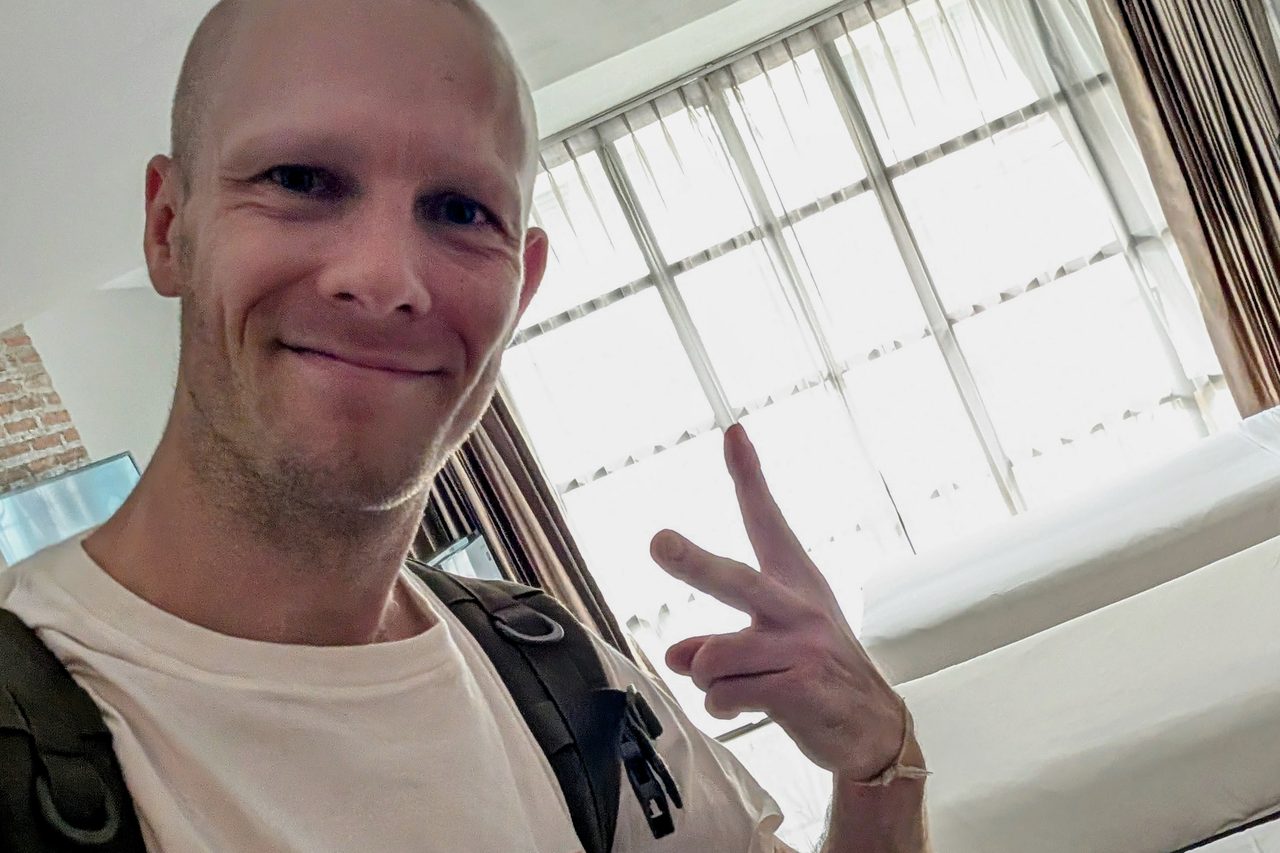
I'm Nikolaj Mandsberg. A physicist by training, and I spend my time building tools for making better decisions. I also spent thirty days ordained as a monk in Thailand, came home with the steadiest mind I have ever had, and lost it inside a week.
So this is not written from the far side of the problem, and it is not a book about being a monk. I still catch myself believing that doing nothing is a waste of time.
Who it is for
- Eleven-hour workdays that do not hurt, and are hard to put down.
- Lunch, commute and sleep all optimised, and a growing question about what the saved time is for.
- Twenty minutes of sitting still feels like getting away with something.
And for the version of me who never got those thirty days, and had to arrive at this some other way.
What you're agreeing to
- You get the finished book, free, two to three weeks before it goes on sale. Kindle, EPUB or PDF, whichever you actually read on.
- You read it. Around a hundred pages. Most people will finish it in an evening.
- In launch week, you post an honest review on Amazon. Honest is the whole word. If it didn't work for you, that is the review.
Put me on the list
Thirty places. I'll email you once, when copies go out.
You're on the list.
Now nothing happens for a few weeks, which is admittedly on the nose for this particular book.
When the copies go out you'll get one email from me: the book, in the format you chose, and a couple of lines about what I need. That's all until then.
Nothing arrived? Check your spam folder. If you'd rather talk to a human, write to me.
Questions people have asked
Is this a memoir about ordaining?
No. The monastery is one of the places the thinking was done, and it appears as evidence, including the part where it wore off. If you want a memoir of ordination or instructions for meditating, this will disappoint you, and I would rather you knew that now than in a review.
Is it an argument for being less ambitious?
No, and I would drop the project if it were. Be as ambitious as you like. The claim is narrower: that people who can stay are better at going, because they are choosing it rather than being started by a noise.
What if I don't like it?
Then say so. I would rather have a two-star review that tells the truth than fifteen kind ones. The kind ones are visible from space and they cost the book its credibility. You are also allowed to stop reading and tell me where you stopped, which is more useful than most praise.
When does this happen?
I am drafting it now. Advance copies go out two to three weeks before the book goes on sale, and you will get both dates by email as soon as they are real. I had a date and it has already slipped by about a month, which I would rather tell you now than in a late apology. A book about not rushing is a poor place to start rushing.
We know each other. Can I still do this?
Amazon strips reviews from people it can tell are close to the author, so a review from a friend does the book no good. Sign up anyway, then reply to my email saying we know each other. I will send you the draft as a beta reader instead, where what I want is your honest opinion rather than a public one.
Thirty places, and the only thing I want back is what you actually thought.